Short answer: A typical leather glove takes about 2 to 4 weeks of regular catch to break in on its own. Stiff, premium steerhide can take a month or more, and at least one big leaguer figures a new glove could take all winter. With a break-in routine (conditioner, mallet, overnight wrap with a ball), most gloves are game-ready in 2 to 3 days and keep molding over a few weeks of play.
“How long until it’s ready?” is the first thing every player asks after unboxing a glove. The honest answer is that it depends on two things: the leather, and what you do to it.
Timeline by method
| Method | Game-ready | Fully molded to your hand |
|---|---|---|
| Playing catch only | 2 to 4 weeks | 1 to 3 months |
| Catch + mallet | 1 to 2 weeks | 3 to 6 weeks |
| Conditioner + mallet + overnight wrap, then catch | 2 to 3 days | 2 to 4 weeks |
| Steaming (store or home) | Same day | A few weeks, with more wear on the leather |
Treat these as rough ranges, since leather varies a lot. “Game-ready” means the glove closes without a fight and holds the ball. “Fully molded” means it closes exactly the way your hand closes, with a pocket the ball finds on its own. The first takes days with the right routine. The second always takes some real play.
Timeline by glove type
Synthetic and most youth gloves: little or no break-in. A few days of catch.
Entry-level and pre-softened leather: a few days to a week. Many of these are softened at the factory.
Mid-range leather and kip leather: about 1 to 3 weeks of regular use. Kip is thinner and softer than steerhide, so it gives faster.
Premium steerhide (pro-level gloves): the longest. A month or more of catch alone isn’t unusual, and Rawlings notes that its top lines like Heart of the Hide and Pro Preferred “can take longer to break-in” (Rawlings). Orioles catcher Adley Rutschman told The Baltimore Banner he figures a new glove could take all winter to break in during the offseason (The Banner).
Catcher’s and first base mitts: longer than fielding gloves. More padding, thicker leather. Plan for extra mallet sessions.
Not sure what kind of leather you have? See the easiest gloves to break in.
Why some gloves take so long
Leather is a mesh of tight fibers. Out of the box they’re dry and packed, which is why the glove holds its shape so well and also why it won’t close. Breaking in does two things: it puts moisture back into those fibers and it flexes them over and over in the same spots until they loosen there.
Playing catch does both, slowly. Your hand supplies a little moisture and every catch supplies one small flex. It’s no surprise a coach quoted by Nike puts a full break-in at anywhere from three weeks to a few months. A conditioner adds moisture in minutes, and a mallet adds hundreds of flexes in minutes. That’s the whole reason a routine is faster than catch alone.
How to cut the time down (safely)
- Clean first. Factory residue can keep conditioner sitting on the surface. A quick foam clean helps it soak in.
- Condition thin. A pea-sized amount on a cloth, worked into the pocket, heel and laces.
- Mallet the pocket and the heel. 10 to 15 minutes per session.
- Wrap overnight with a ball. Two or three nights in a row.
- Then play catch daily. 15 to 20 minutes a day for the first week.
The full method, with timing for each step, is in our 2-day fast break-in guide.
Don’t rush with heat. An oven or microwave can make a glove soft in minutes, but it can also dry out the leather, and Rawlings warns heat can affect the warranty. Saving a few days isn’t worth shortening the glove’s life.
How do you know it’s done?
It closes with light pressure from your thumb and pinky, it holds a ball without you squeezing, and it keeps its shape when you set it down. If it does all three, you’re done breaking it in, and the job becomes keeping it that way. More detail: what a broken-in glove should look like.
Get there faster
The Nordari Glove Break-In Kit has everything for the 2 to 3 day routine: foam cleaner, an oil-free cream conditioner that won’t darken the leather, a one-piece hardwood mallet, a glove wrap, a bristle brush and a microfiber cloth.
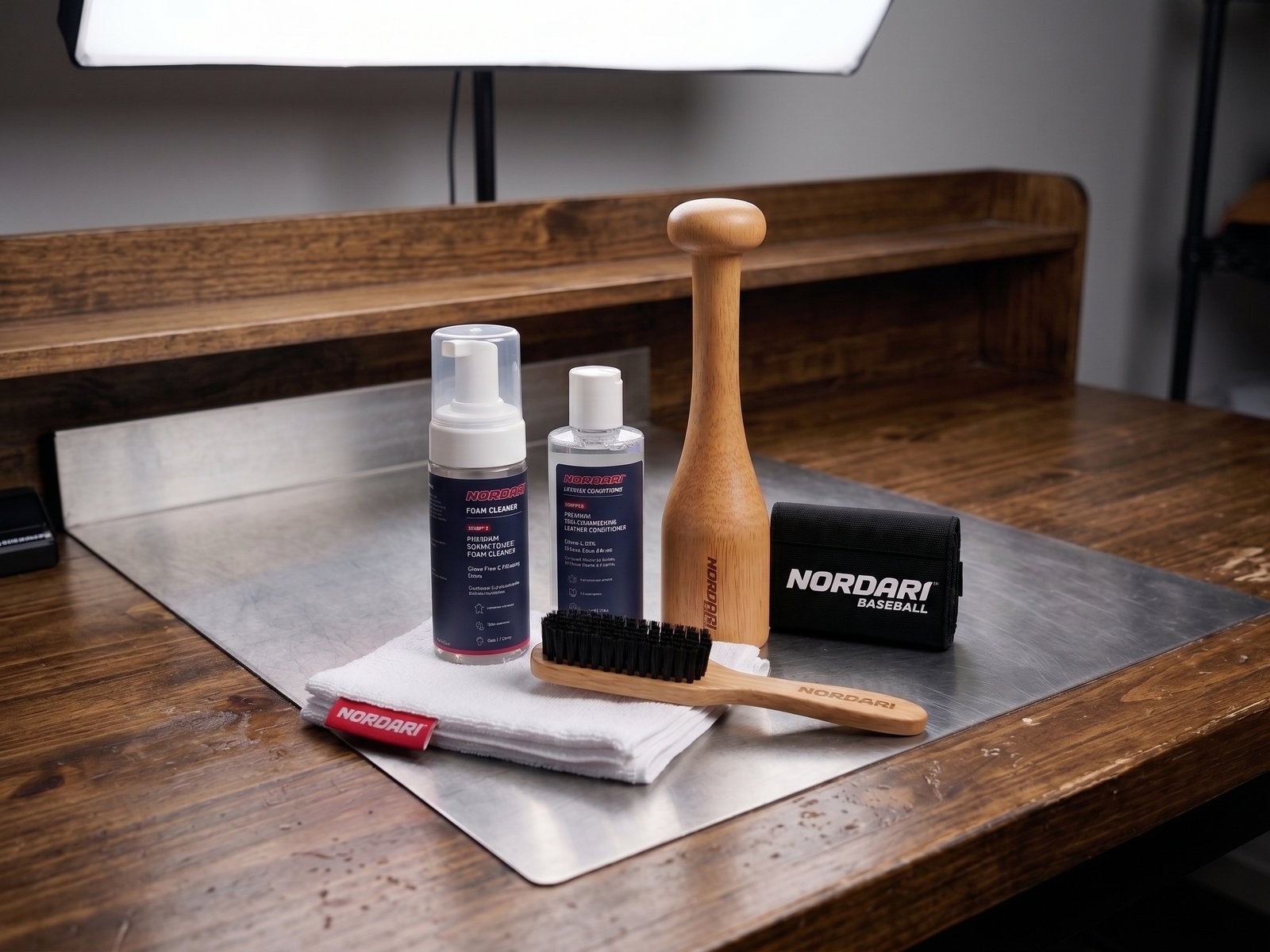
The Nordari Glove Break-In Kit
Clean, soften and shape your glove from one box: foam cleaner, oil-free cream conditioner, one-piece hardwood mallet, glove wrap, bristle brush and microfiber cloth. Non-darkening, for baseball and softball gloves, youth to adult.
Frequently asked questions
How long do gloves take to break in by just playing catch?
Usually 2 to 4 weeks of regular catch for a typical leather glove. Premium steerhide can take a month or more.
Is a week enough to break in a glove?
Yes, if you use a routine. Two or three nights of conditioning, mallet work and wrapping, plus daily catch for the rest of the week, gets most gloves ready for games.
Why is my new glove still stiff after a month?
Either it’s a stiff, premium leather, or the break-in only happened in the pocket. Work the heel hinges with a mallet and by hand, and condition the laces, which often hold a glove shut.
Do softball gloves take longer to break in?
Larger gloves have more leather to soften, so they can take a bit longer, though some softball gloves are softer out of the box. See our slowpitch softball glove guide.