Short answer: You can get most leather gloves game-ready in about 48 hours at home. Clean the surface, rub in a thin layer of cream conditioner, pound the pocket and heel with a mallet for 10 to 15 minutes, then wrap the glove around a ball overnight. Do it twice, then play 20 minutes of catch. Heat-based shortcuts are faster, but they can shorten your glove’s life.
Tryouts are Saturday. The new glove still won’t close. We’ve all been there.
The good news is that you don’t need weeks. The bad news is that the fastest-sounding tricks (the oven, the microwave, a hot bath) are the ones that wreck leather. Here’s how to get the speed without the damage.
How quickly can you really break in a glove?
Rough numbers for a leather glove (every glove is a little different):
| Method | Game-ready in | Risk to the glove |
|---|---|---|
| Playing catch only | 2 to 4 weeks (longer for stiff steerhide) | None |
| Conditioner + mallet + overnight wrap | 2 to 3 days | Low, if you go light on product |
| Store steaming | Same day | Can damage leather and affect warranty (per Rawlings) |
| Oven, microwave, boiling water | Minutes | High: brittle leather, shrinking, cracked laces |
So “ASAP” for a glove you want to keep is about two days. Anything faster trades the glove’s lifespan for time.
Want to see it done? Our tutorial shows the fast routine step by step: clean, condition and shape the glove, with no heat.
The 48-hour method
Day 1, evening (about 30 minutes)
1. Clean the surface. A new glove often has factory residue that keeps conditioner from soaking in evenly. Brush a little foam cleaner over the leather, seams and laces, wipe it off and let it air dry for a few minutes. Skip this and the conditioner mostly sits on top.
2. Condition the flex points. Put a pea-sized amount of cream conditioner on a cloth. Rub it into the pocket, the palm, the heel hinge, the base of the thumb and pinky, and the laces. Thin coat. If it looks shiny after five minutes, wipe the extra off.
3. Loosen it by hand. Fold the glove closed at the heel 30 times. Bend the thumb and pinky inward one at a time. Fold the web in half and squeeze it.
4. Pound the pocket. Glove on, pound the pocket with a mallet for 5 minutes, right where you want the ball to sit. Glove off, hit the outside of the heel on the thumb side and the pinky side to open the break points. Then 5 more minutes on the pocket.
5. Wrap it overnight. Ball in the pocket, glove closed the way you want it to close, glove wrap around it. Cool, dry room. This overnight wrap is where most of the shaping happens (how to wrap a glove the right way).
Day 2, morning (5 minutes)
Unwrap it and flex the glove open and closed. You’ll notice the heel already gives. If the leather looks dry anywhere, add a tiny bit of conditioner there only.
Day 2, evening (20 minutes)
Repeat the mallet work (10 minutes, focus on whatever still feels stiff) and wrap it again overnight with the ball.
Day 3: play catch
Take it outside. Fifteen to twenty minutes of catch, a few ground balls, a few balls caught in the web. This is what teaches the glove how your hand closes it. After this, it’s ready for practice.
No mallet? A baseball in your throwing hand works. So does the knob end of a wooden bat. It’s slower, but it works. What doesn’t work: a hammer. A metal head can dent or split the leather.
How do you soften a glove fast without heat?
Softening comes from two things: moisture in the leather fibers and repeated flexing. Heat seems faster because it loosens the fibers quickly, but it can also pull the natural oils out. That’s why a microwaved glove can feel great at first and then dry out and stiffen.
A cream conditioner gives the moisture, the mallet and your hands give the flexing. Together they can soften a glove in a day or two, and the leather stays healthy.
What about steaming?
Some sporting goods stores steam gloves, and plenty of players swear by it. It’s fast. But glove makers like Rawlings advise against steaming, boiling or baking a glove, because it can damage the leather and affect the warranty (Rawlings). If you do get a glove steamed, condition it afterward and keep an eye on it, since it may dry out sooner. We compare store services and prices in what a glove break-in service costs.
Shortcuts to skip
- Oven or microwave. Fast, and the fastest way to crack a glove.
- Soaking it in oil. You’ll get a heavy, dark, floppy glove that’s very hard to fix.
- Vaseline or shaving cream. Old tricks with real downsides. We break both down in shaving cream for gloves and Vaseline on gloves.
- Sitting on it or putting it under the mattress. It flattens the pocket instead of shaping it.
- Driving over it. Rawlings jokes about this one in its break-in guide. It doesn’t help.
Everything you need in one box
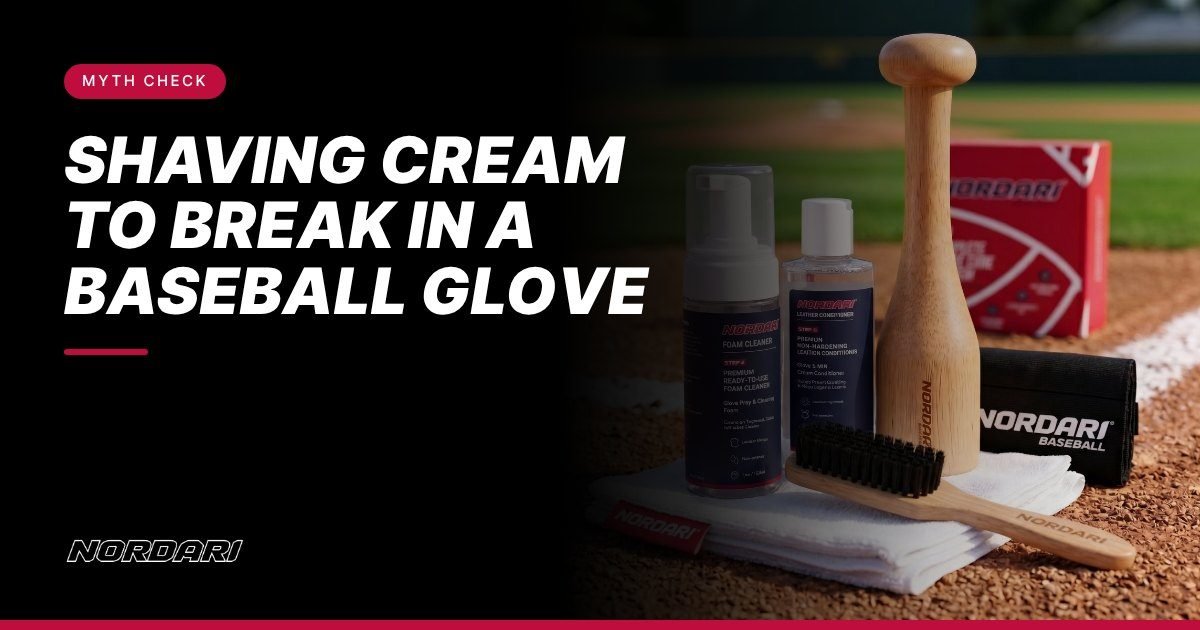
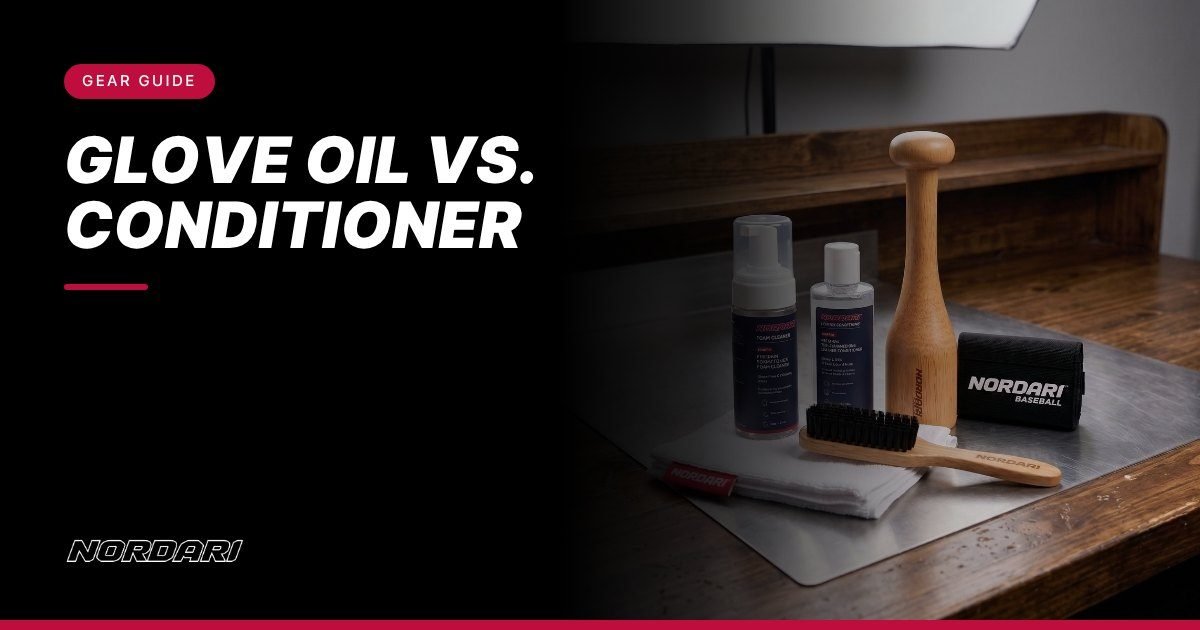
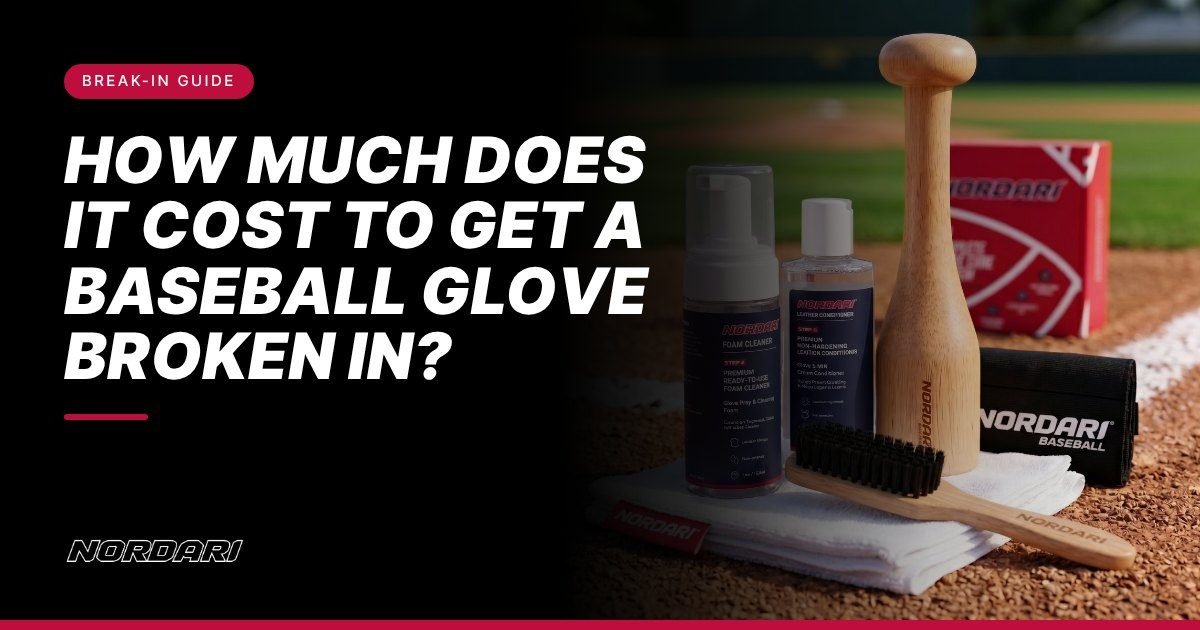
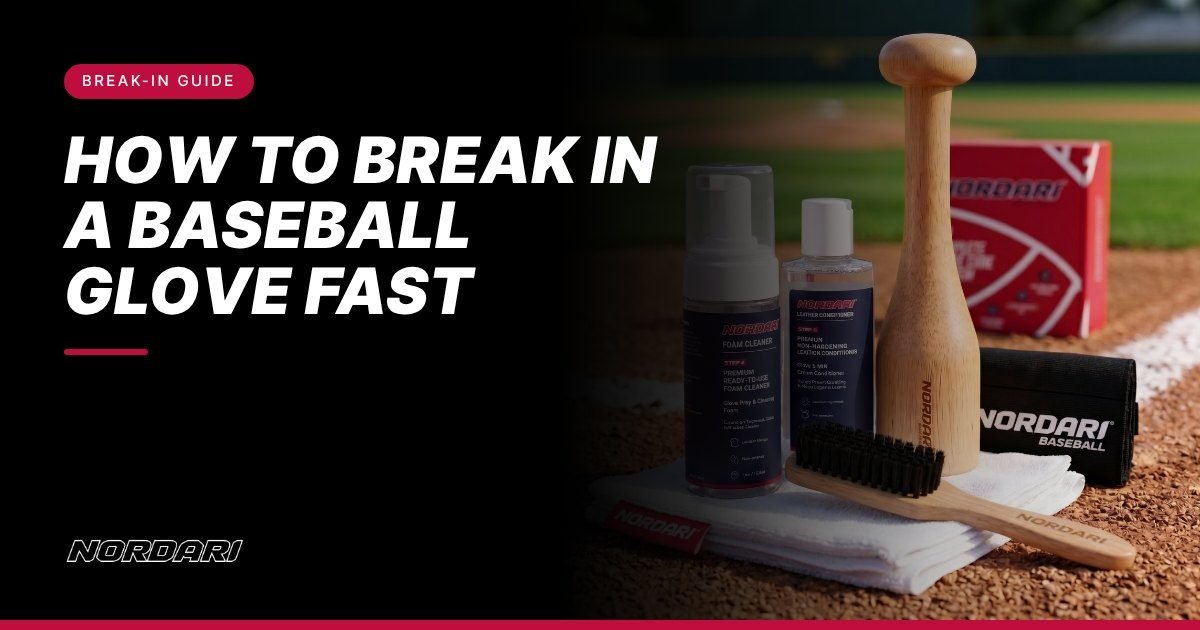
Whatever you use, make sure it covers cleaning, conditioning, a mallet and a wrap (here’s why each piece matters). If you’d rather not piece it together, our Nordari Glove Break-In Kit has foam cleaner to prep the leather, an oil-free cream conditioner that won’t darken it, a one-piece hardwood mallet, a glove wrap with strong hook-and-loop, a brush and a microfiber cloth.
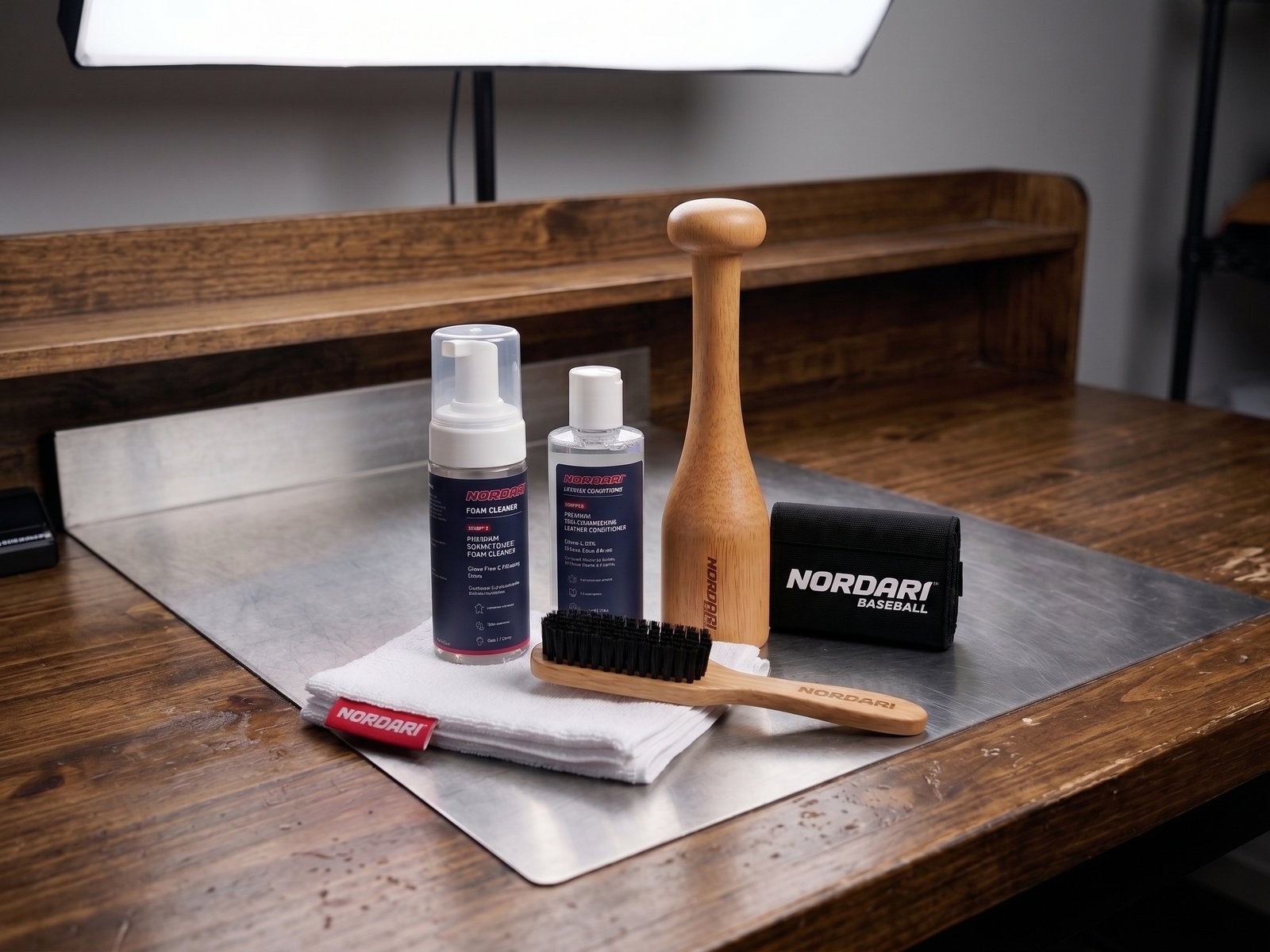
The Nordari Glove Break-In Kit
Clean, soften and shape your glove from one box: foam cleaner, oil-free cream conditioner, one-piece hardwood mallet, glove wrap, bristle brush and microfiber cloth. Non-darkening, for baseball and softball gloves, youth to adult.
For the full, unhurried version of the routine, see our step-by-step guide to breaking in a baseball glove.
Frequently asked questions
How do I break in a glove ASAP for a game tomorrow?
Do one evening session (clean, condition lightly, mallet for 10 to 15 minutes, wrap overnight with a ball) and play catch before the game. It won’t be perfect, but it will close.
Can you break in a baseball glove overnight?
Partly. One evening of cleaning, light conditioning and mallet work, followed by a night wrapped around a ball, makes most gloves noticeably easier to close by morning. Two or three nights plus some catch is what really sets the pocket.
Can you break in a glove without a mallet?
Yes. Pound the pocket with a baseball held in your throwing hand, or with the knob of a bat, for 10 to 15 minutes, then wrap the glove around a ball overnight. It takes a night or two longer than with a mallet, so add a few minutes of catch every day.
Can you break in a baseball glove in one day?
You can make it usable in one day with a mallet, conditioner and a few hours wrapped around a ball. Plan on a second night of wrapping and some catch to really set the pocket.
What’s the fastest safe way to soften a glove?
A light layer of cream conditioner plus lots of flexing and mallet work. It softens the leather without stripping its natural oils the way heat can.
Does putting a glove in the microwave work?
Some big leaguers have done it (Yoán Moncada and Jackson Holliday among them), but a pro can get a replacement glove far more easily than you can. For a glove you paid for yourself, heat can dry out the leather, and Rawlings warns it can affect the warranty. It’s not worth it.