Short answer: Glove oil penetrates deep and softens fast, but it adds weight and can darken the leather if you use too much. A cream or gel conditioner is lighter and easier to apply in a thin coat, which makes it the safer choice for breaking in and for regular care. You can find both at sporting goods stores like Dick’s and Academy, at Walmart, on Amazon and at local baseball shops.
Every glove needs some kind of conditioning, both to break it in and to keep it from drying out and cracking over the years. The question is what kind, and how much. Getting this wrong is one of the easiest ways to ruin a good glove.
How conditioning softens a glove
Leather is a dense web of fibers held together with natural fats. When it dries out, those fibers stiffen and can eventually crack. A conditioner replaces some of that moisture and fat so the fibers slide and flex. That’s what “softening” really means.
The difference between products is how deep they go, how much they leave behind, and how they change the leather’s color and weight.
Glove oil
What it is: liquid oils or oil blends made for glove leather (common bases include lanolin and neatsfoot oil).
Pros: – penetrates deep, softens fast, – good for very stiff leather when used sparingly.
Cons: – easy to overdo: get heavy-handed and the glove turns heavy and floppy, – can darken leather, especially light tan, blonde and colored gloves, – can attract dirt if left on the surface.
How to use it: a few drops on a cloth, never poured on the glove (full steps in how to oil a baseball glove). Rawlings recommends a light coat of its Glovolium glove treatment, about once a season, and warns not to saturate the glove (Rawlings).
Cream and gel conditioners
What it is: emulsions (often water-based) that carry conditioning agents into the leather.
Pros: – easy to apply in a thin, even coat, – lighter, so the glove doesn’t gain much weight, – some are formulated to avoid darkening, – good for both break-in and regular maintenance.
Cons: – softens a bit more gradually than heavy oil on very stiff leather, which is why it works best combined with a mallet and an overnight wrap.
How to use it: a pea-sized amount on a cloth, rubbed into the pocket, heel, thumb and pinky base and laces. Wipe off anything left on the surface after a few minutes.
Oil vs. conditioner at a glance
| Glove oil | Cream conditioner | |
|---|---|---|
| Softening speed | Fast | Moderate |
| Risk of over-softening | Higher | Lower |
| Adds weight | Yes, if overused | Minimal |
| Can darken leather | Yes, especially light leather | Non-darkening formulas available |
| Best for | Very stiff leather, used sparingly | Break-in and regular care |
How often should you condition a glove?
- Breaking in: a light layer before each of the first two or three mallet-and-wrap sessions, only where the leather looks dry.
- During the season: whenever the leather starts to look dry or feels stiff. Rawlings suggests about once a season; a glove that sees heavy use in hot, dry weather may need a touch more. Clean it first.
- Before storing for winter: clean, condition lightly, store with a ball in the pocket.
If the leather looks shiny or feels greasy, you’ve used too much. Wipe off the excess and wait longer next time.
Where can I find glove conditioning oils and conditioners?
- Sporting goods stores: Dick’s Sporting Goods and Academy Sports + Outdoors carry glove oils, gels and creams from the big glove brands. In October 2026, Dick’s listed options like Rawlings Glove Conditioner at $10.99 and Rawlings Glove Gel Conditioner at $12.99 online (Dick’s).
- Big-box retailers: Walmart and similar stores may carry a few basic options.
- Amazon: the widest range, including complete care kits.
- Local baseball shops and glove repair shops: often the best advice, and sometimes their own house blends.
- Glove brands’ websites: Rawlings, for one, sells its own Glovolium care products.
Avoid these as “conditioners”
- Vaseline / petroleum jelly. Rawlings specifically warns against it. Details in does Vaseline help break in a glove.
- Cooking oils (olive, vegetable). They can go rancid and smell, and Academy says to skip them.
- WD-40 or motor oil. Academy lists these among things not to use.
- Shaving cream. An old trick, but not a conditioner. See shaving cream on a glove.
Our pick for break-in and care
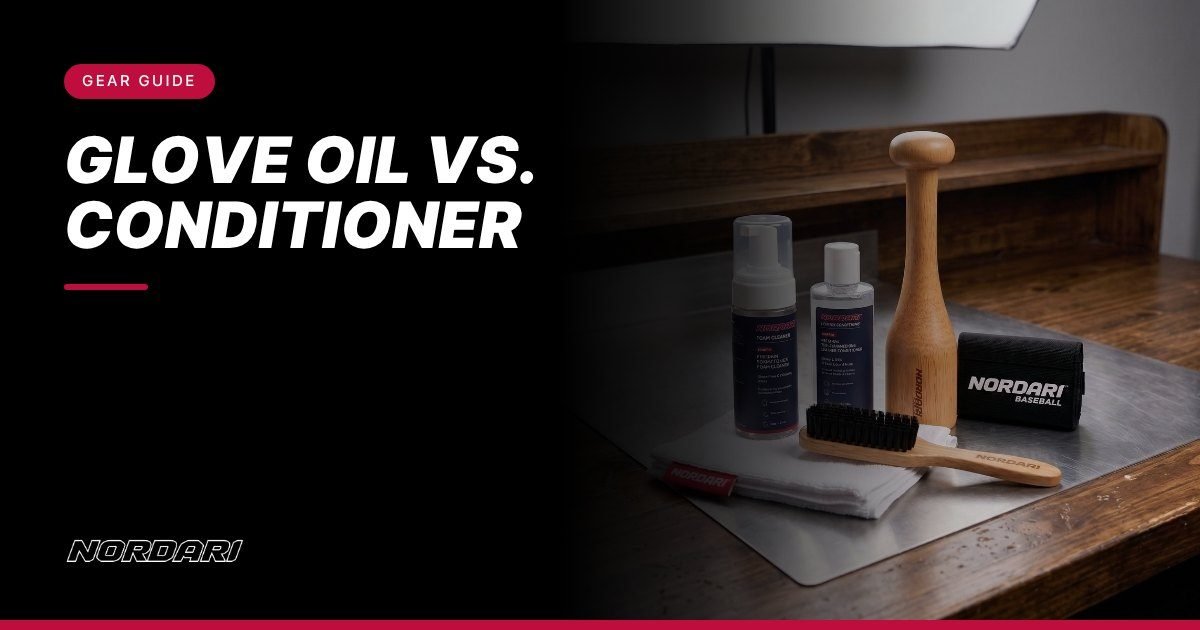
The cream in the Nordari Glove Break-In Kit is oil-free and water-based. It softens stiff leather like glove oil without the extra weight, floppy pocket or dark stains, and it’s non-darkening, so it’s safe on light, colored and custom gloves. The kit pairs it with a pH-neutral foam cleaner so the cream soaks in evenly, plus a hardwood mallet, a glove wrap, a brush and a microfiber cloth.
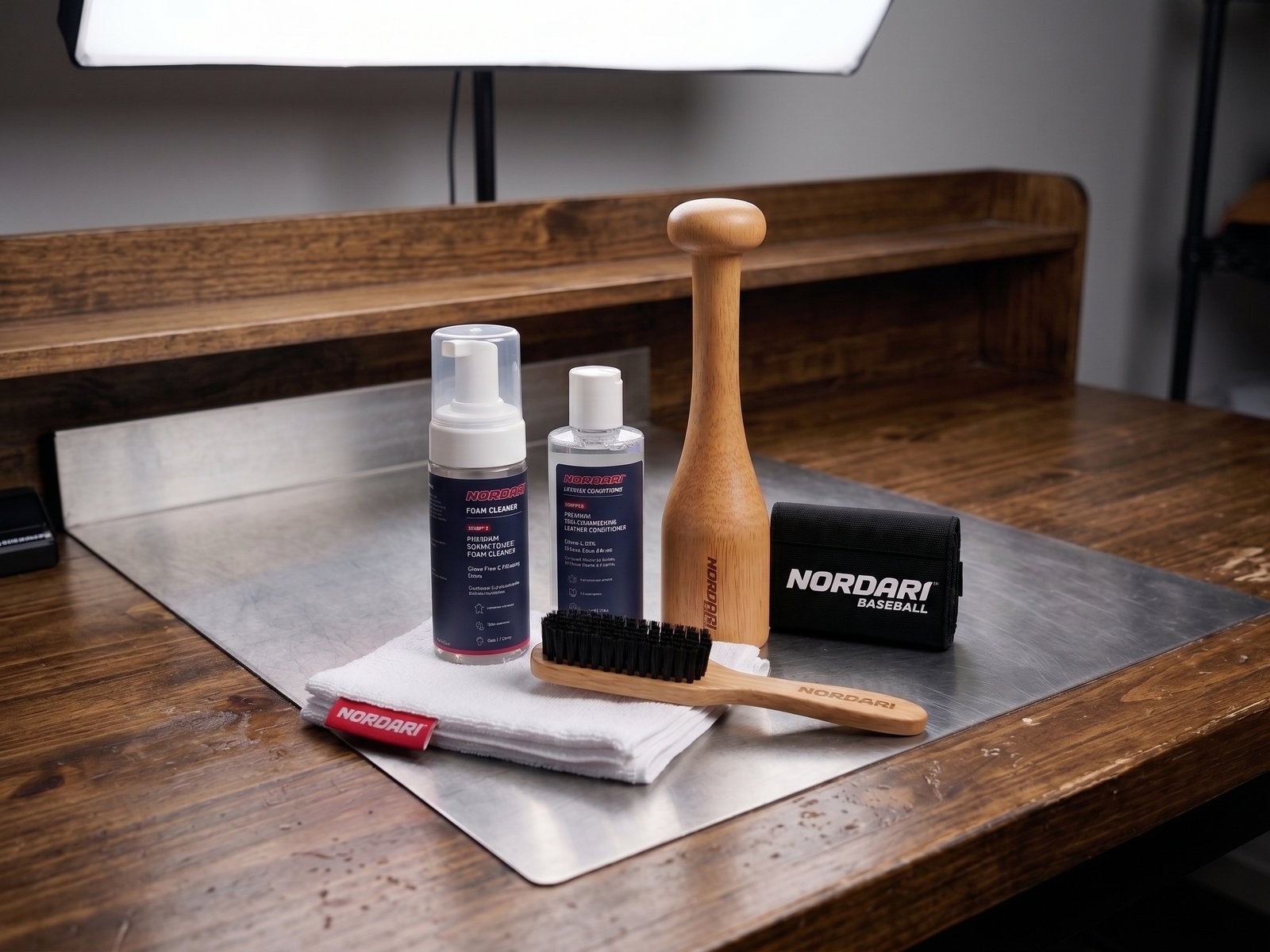
The Nordari Glove Break-In Kit
Clean, soften and shape your glove from one box: foam cleaner, oil-free cream conditioner, one-piece hardwood mallet, glove wrap, bristle brush and microfiber cloth. Non-darkening, for baseball and softball gloves, youth to adult.
Frequently asked questions
Should I use glove oil on a new glove?
You can, very sparingly. A cream conditioner is easier to control and less likely to make the glove heavy or dark. Either way, clean the glove first and apply with a cloth.
Does glove oil darken leather?
Many can, especially on light or colored gloves. If color matters to you, look for a product labeled non-darkening and test on a small hidden area first.
Can you use leather conditioner made for boots or furniture?
Some general leather conditioners work, but some contain waxes or silicones that can make a glove slick or heavy. A product made for glove leather is the safer bet.
How much conditioner should I use?
About a pea-sized amount on a cloth per area. If you can see product on the surface after a few minutes, it was too much.